Chapter 9 - Phase 5 Moderator Review and Transcript Verification
The Moderator: Guardian of the Official Meeting Record
Every successful verification process requires a final decision-maker.
Artificial Intelligence can identify potential issues.
Meeting participants can contribute valuable insights.
However, neither should determine the official record of an organisational meeting.
That responsibility belongs to the Moderator.
Within the AI-Transcript methodology, the Moderator is not simply another reviewer.
The Moderator is the custodian of the verified transcript and the final authority responsible for ensuring that the meeting record accurately reflects what was discussed, agreed, and committed during the meeting.
While AI provides analysis and participants provide knowledge, the Moderator provides judgement.
This distinction is fundamental to producing Minutes of Meeting that organisations can trust.
Why a Moderator Is Essential
Consider a meeting attended by ten people.
During transcript review:
-
one participant believes a decision was made,
-
another believes it was only discussed,
-
AI identifies a possible action item,
-
a third participant suggests additional context,
-
a fourth believes the transcript contains an error.
Who decides?
Without a structured approval process, multiple versions of the "truth" begin to emerge.
The transcript becomes a collection of opinions rather than an authoritative business record.
The Moderator resolves this problem.
Every observation is evaluated.
Every proposed change is considered.
Every decision is supported by evidence.
Only then is the transcript approved.
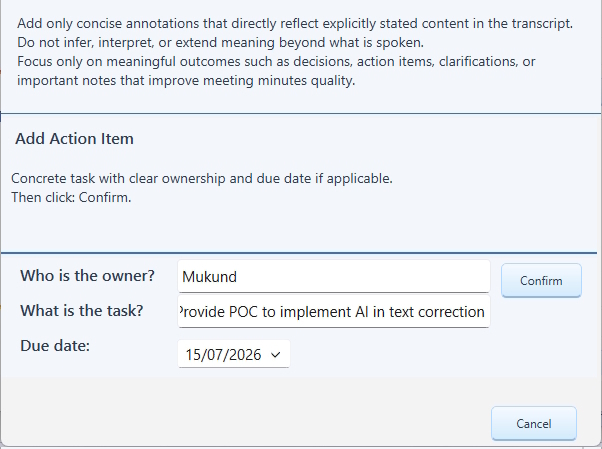
Figure 7: AI-only tools missing vital commitments and ruining official meeting records.
A Different Kind of Editing
Traditional document editing allows multiple people to modify text directly.
AI-Transcript deliberately avoids this approach.
The transcript represents historical evidence.
Historical evidence should not be freely rewritten.
Instead, AI-Transcript separates review from approval.
Participants submit observations.
Artificial Intelligence identifies issues.
The Moderator evaluates both before deciding whether the official transcript should change.
This preserves the integrity of the original meeting while ensuring that improvements remain evidence-based.
A Focused Review Environment
One of the challenges of reviewing long meeting transcripts is volume.
A two-hour meeting may contain more than a thousand transcript segments.
Reading every line repeatedly is both inefficient and unnecessary.
AI-Transcript therefore presents the Moderator with a focused review environment.
Rather than displaying the entire transcript, the Moderator primarily sees only the segments that require attention.
These are known as Issues.
Each issue has already been identified either by Artificial Intelligence or by meeting participants.
This approach allows the Moderator to concentrate on uncertainty rather than repeatedly reviewing information that has already been accepted.
The Issue Queue
The Moderator works through issues one at a time.
Each issue contains:
-
the transcript segment
-
speaker information
-
surrounding transcript context
-
participant comments
-
AI observations
-
issue category
-
audio playback
-
proposed corrections (where applicable)
This structured presentation enables informed decisions without requiring the Moderator to search manually through the transcript.
The process is systematic, repeatable, and efficient.
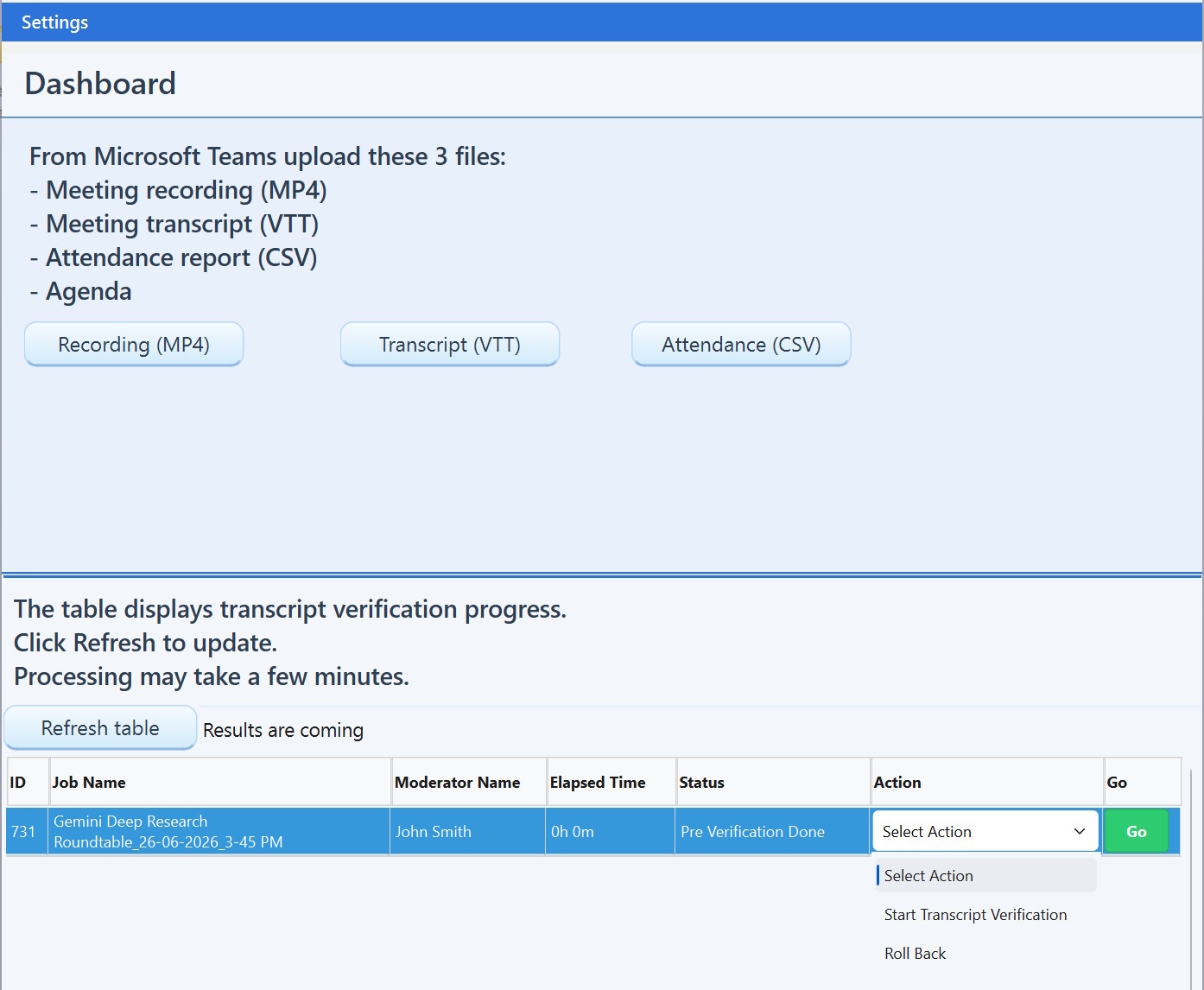
Figure 8: Managing transcripts queue
Four Sources of Evidence
Every moderator decision is based upon evidence rather than assumption.
Typically, the Moderator considers four complementary sources.
1. The Transcript
The recognised text provides the starting point for every review.
It represents the initial interpretation of the meeting produced by Microsoft's speech recognition technology.
2. The Original Audio
The Moderator can immediately replay the corresponding section of the meeting recording.
Listening to the original conversation often resolves uncertainty that reading alone cannot.
This is especially valuable when reviewing:
-
overlapping conversations,
-
uncertain terminology,
-
speaker identification,
-
disputed wording.
3. Participant Comments
Meeting participants provide valuable business context.
They explain terminology.
Clarify intent.
Identify overlooked commitments.
Correct transcription mistakes.
These observations provide insight that AI cannot infer independently.
4. Artificial Intelligence
AI contributes an additional analytical perspective.
It identifies:
-
possible inconsistencies,
-
missing information,
-
ambiguous statements,
-
potential decisions,
-
possible actions.
The Moderator evaluates these observations alongside all other available evidence.
Reviewing Issues
Each issue presented to the Moderator belongs to one of the four verification categories introduced earlier.
These categories help prioritise review.
Blockers generally require immediate attention because they may prevent reliable Minutes of Meeting from being created.
Corrections improve factual accuracy.
Clarifications improve understanding.
Suggestions enhance the usefulness of the final meeting record.
By reviewing issues category by category, Moderators can work systematically without overlooking important observations.
Corrections versus Annotations
One of the Moderator's most important responsibilities is deciding how information should be incorporated into the transcript.
Not every issue should result in editing the original transcript.
AI-Transcript therefore distinguishes between two different approaches.
Transcript Corrections
Corrections modify the transcript because something is objectively incorrect.
Examples include:
-
incorrect speaker names,
-
transcription mistakes,
-
incorrect terminology,
-
incorrect numbers,
-
duplicated text.
Corrections improve factual accuracy.
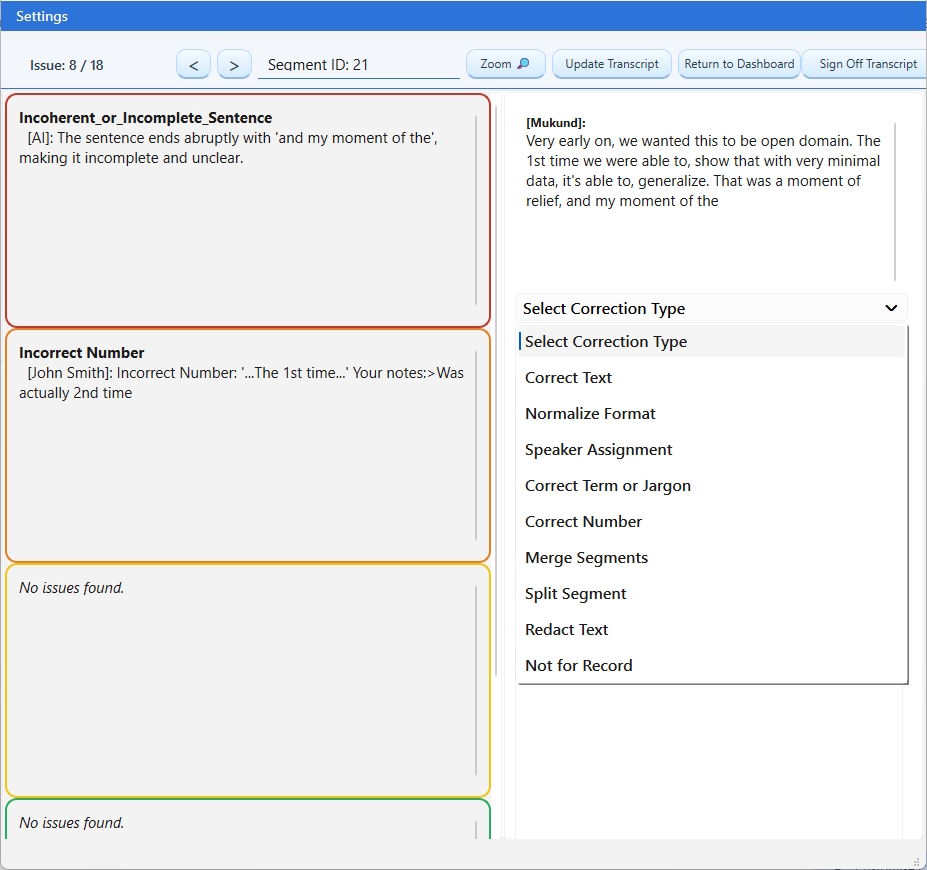
Figure 9: Corrections modify the transcript because something is objectively incorrect
Transcript Annotations
Annotations preserve the original transcript while adding valuable business information.
Examples include:
-
explanation of technical terminology,
-
additional meeting context,
-
recording a formal decision,
-
identifying business risks,
-
documenting assumptions.
Annotations enrich the transcript without changing what participants originally said.
This distinction is particularly important in regulated environments where preserving historical evidence is essential.
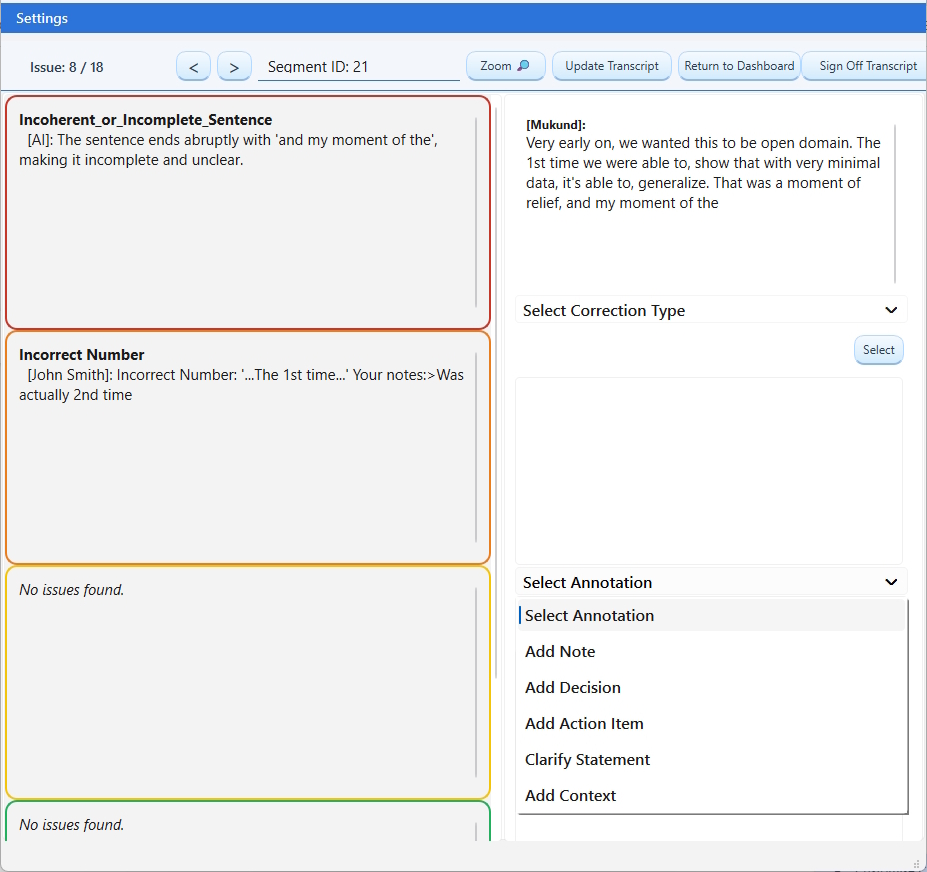
Figure 10: Annotations preserve the original transcript while adding valuable business information.
The Importance of Context
Every transcript segment exists within a broader conversation.
Reviewing one sentence in isolation can easily lead to incorrect conclusions.
For this reason, AI-Transcript provides contextual navigation.
The Moderator can immediately display transcript segments before and after the selected issue.
By expanding or reducing the surrounding context, the Moderator gains a better understanding of how the discussion developed.
Often, uncertainty disappears once the surrounding conversation is reviewed.
Zooming Into the Discussion
Some discussions require greater detail.
AI-Transcript includes a Zoom function that expands the selected issue into a focused review window.
Rather than displaying only the affected transcript segment, the Zoom view presents a larger portion of the surrounding conversation.
The Moderator can adjust how much context is displayed before and after the issue.
For example:
-
one preceding segment,
-
five preceding segments,
-
or several minutes of discussion.
Each transcript segment within this expanded view includes direct audio playback.
This allows the Moderator to follow the discussion naturally while comparing text with speech.
The result is a far more informed review than reading isolated transcript excerpts.
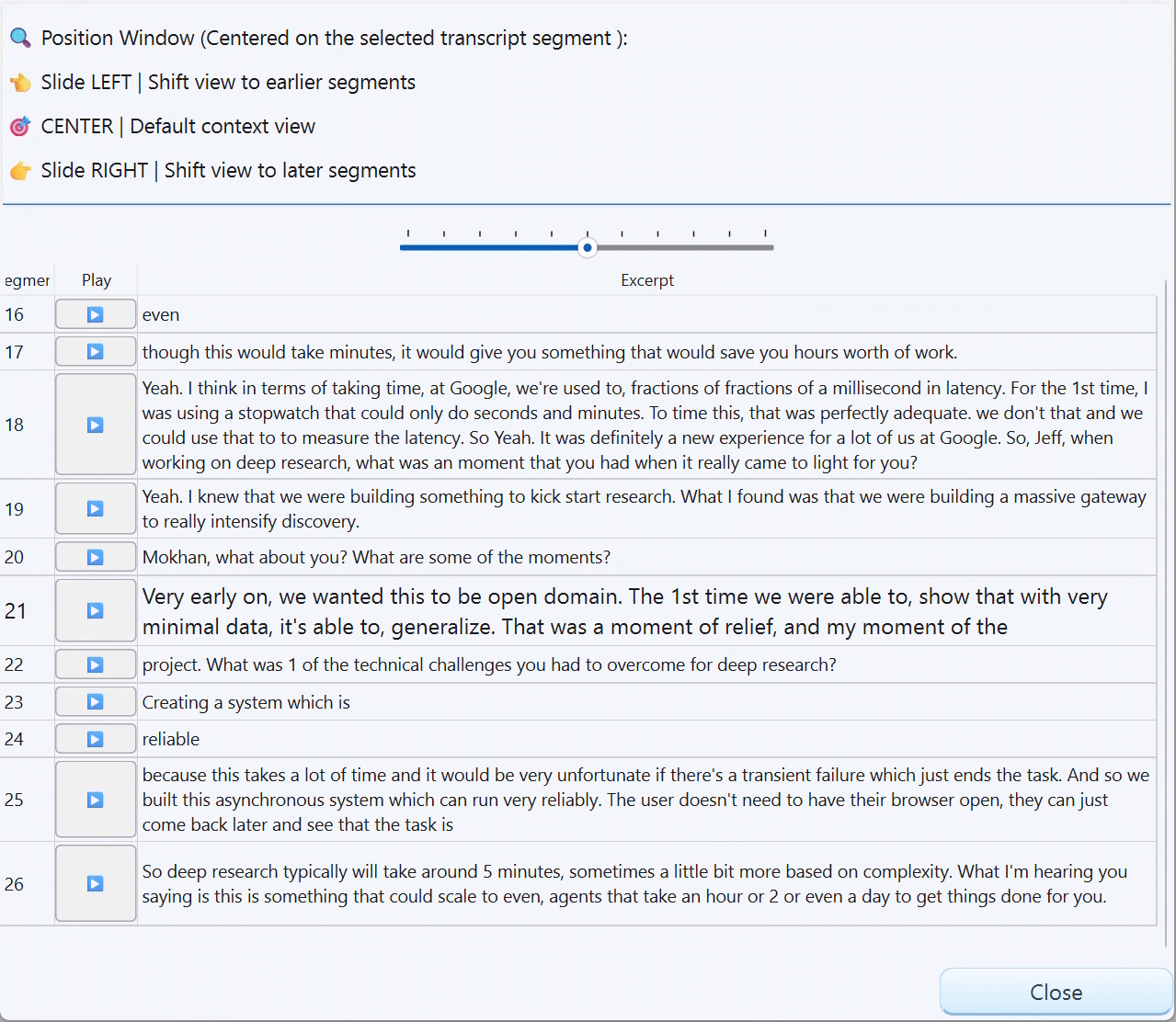
Figure 11: Screenshot of the AI-Transcript Zoom view expanding a discussion segment with surrounding context.
Human Judgement Cannot Be Automated
Artificial Intelligence can identify potential issues.
It cannot determine organisational intent.
For example:
A participant says:
"Let's investigate this further."
Did they:
-
assign an action?
-
make a recommendation?
-
postpone the decision?
-
simply express an opinion?
Only someone familiar with the discussion can decide.
The Moderator applies this judgement.
This illustrates an important principle of AI-Transcript:
Artificial Intelligence assists.
The Moderator decides.
Consistency Across the Entire Transcript
Every moderator decision has consequences beyond the immediate transcript segment.
Correcting a project name improves every future reference.
Confirming a speaker identity updates the transcript consistently.
Clarifying a technical term improves AI understanding throughout the meeting.
The Moderator therefore improves not merely individual transcript lines but the consistency of the entire meeting record.
Approving the Verified Transcript
Eventually, every issue reaches one of three outcomes.
It is:
-
accepted,
-
modified,
-
or dismissed.
Once all significant issues have been reviewed, the transcript is ready for approval.
Signing off the transcript confirms that:
-
all major issues have been evaluated,
-
speaker identities have been verified,
-
terminology has been standardised,
-
participant feedback has been considered,
-
corrections have been applied appropriately,
-
annotations accurately reflect additional business knowledge.
The transcript now becomes the organisation's verified version of the meeting.
It forms the foundation for every subsequent AI-generated output.
Governance Through Accountability
The Moderator plays a governance role rather than merely an editorial role.
Every approval contributes to:
-
organisational accountability,
-
consistent meeting records,
-
improved compliance,
-
stronger audit capability,
-
more reliable knowledge management.
Instead of relying upon an automatically generated transcript, the organisation now possesses a meeting record that has been reviewed, evaluated, and formally approved.
This distinction is one of the defining characteristics of AI-Transcript.
Conclusion
The Moderator is the final link between Artificial Intelligence and organisational trust.
By combining AI analysis, participant knowledge, transcript evidence, and original meeting audio, the Moderator transforms an automatically generated transcript into a verified organisational record.
This approval process does more than improve accuracy.
It establishes confidence.
Confidence that decisions are recorded correctly.
Confidence that actions have been assigned appropriately.
Confidence that future readers can rely upon the meeting record.
Only after this stage is complete does AI-Transcript generate the final Minutes of Meeting, knowing that they are based on information that has already earned the organisation's trust.